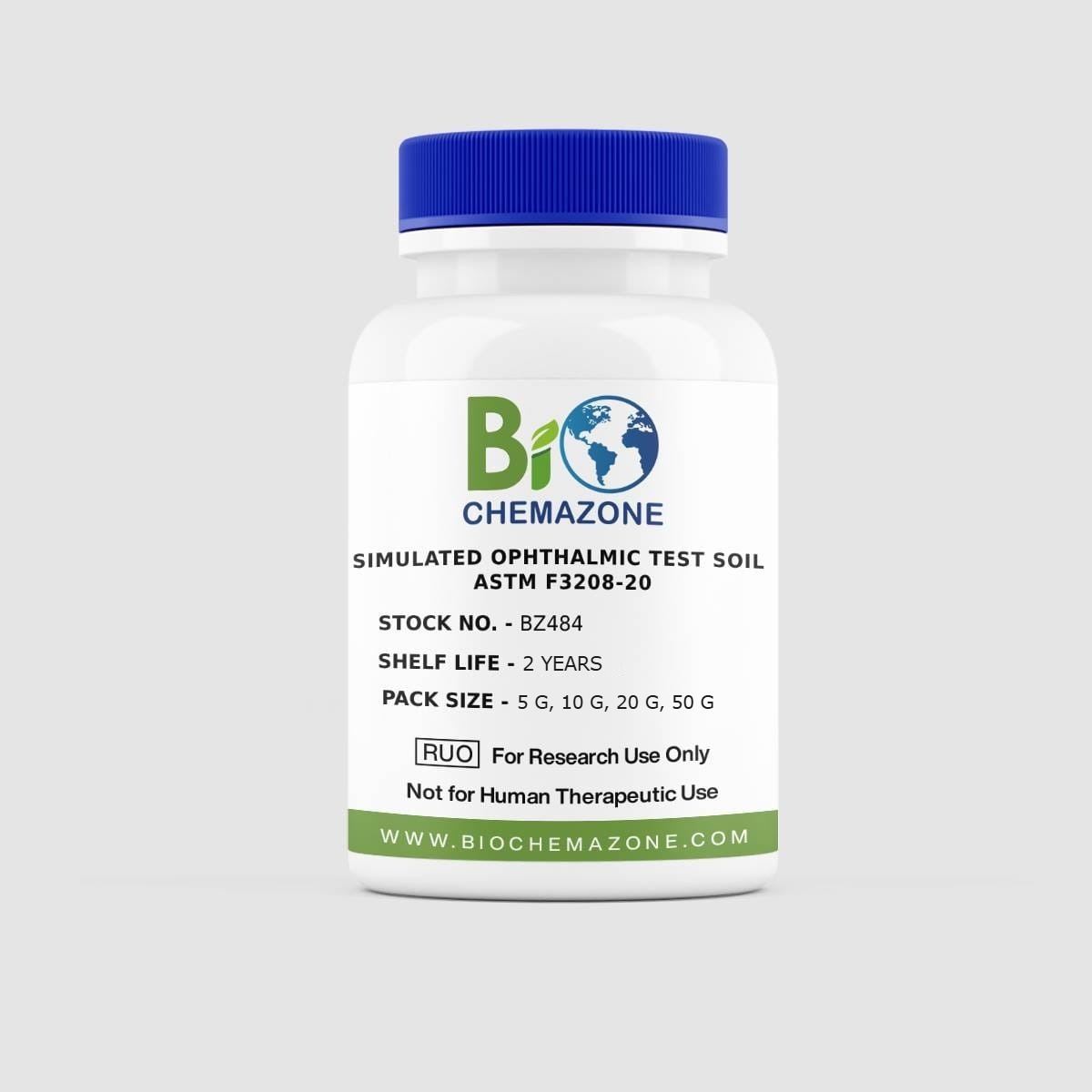
Simulated Ophthalmic Test Soil ASTM F3208-20 – for Cleaning Validation of Ophthalmic Instruments BZ484
Product Code: BZ484
Manufacturer: Biochemazone
Available Pack Sizes: Dried Powder: 5 g, 10 g, 20 g, 50 g – for making 50 mL, 100 mL, 200 mL, 500 mL · Premixed Ready to Use Formulation: 50 mL, 100 mL, 200 mL, 500 mL
Custom Bulk Quantities Available
Product Overview
Biochemazone Simulated Ophthalmic Test Soil BZ484 is an artificial test soil for the cleaning validation of reusable ophthalmic medical devices, developed in line with ASTM F3208-20. It mimics the contaminants met in ophthalmic procedures – tear film residues, proteins, lipids and salts. The soil contains purified bovine proteins (hemoglobin and albumin), lipids and polysaccharides, mucin and artificial tear film components in a salt solution of sodium chloride, potassium chloride and phosphate buffer, and it is light tan to translucent, like tear film residue.
BZ484 is used for the simulated-use soiling and cleaning validation of reusable instruments such as forceps, phacoemulsification handpieces and diagnostic lenses, for developing and validating cleaning agents and automated cleaning systems for ophthalmic instruments, and in research on cleaning technologies for the ophthalmic industry. It can be combined with other test soils, such as a blood soil, for devices that meet mixed contamination.
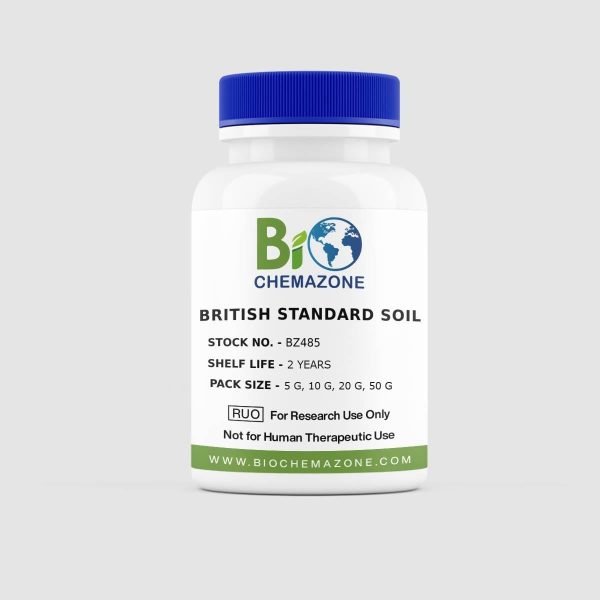
BZ484 can be ordered as Dried Powder or as a Premixed Ready to Use Formulation – the powder in 5 g, 10 g, 20 g and 50 g packs for making 50 mL, 100 mL, 200 mL and 500 mL, and the premixed formulation in 50 mL, 100 mL, 200 mL and 500 mL packs. The dried powder has a 2-year shelf life and can be reconstituted easily. Unopened, it has a 2-year shelf life at 2–30 °C and is shipped at room temperature. For general surgical instruments see Artificial Test Soil ASTM F3208-20 (BZ477); to add blood see Defibrinated Blood Soil.
Two Versions to Select
- Dried Powder: Dry components that are reconstituted before the test.
- Premixed Ready to Use Formulation: Supplied mixed and ready to apply, with no weighing or mixing.
Select the version first and then the pack size. The Dried Powder has a 2-year shelf life and can be reconstituted easily: 5 grams is for making 50 mL, 10 grams is for making 100 mL, 20 grams is for making 200 mL and 50 grams is for making 500 mL. The Premixed Ready to Use Formulation is supplied in 50 mL, 100 mL, 200 mL and 500 mL packs.
Composition
- Purified bovine proteins: hemoglobin and albumin
- Lipids and polysaccharides
- Mucin
- Artificial tear film components
- Salt solution: sodium chloride, potassium chloride and phosphate buffer
How to Use
- Prepare the soil: reconstitute the dry components, or use the Premixed Ready to Use Formulation as supplied.
- Soil the device: apply the test soil to the tips, jaws, lumens and optical surfaces that meet the eye.
- Clean: put the device through the cleaning procedure being validated.
- Analyse: the soil is light in colour, so rely on a protein assay or another quantitative endpoint as well as visual inspection.
Key Features & Benefits
✅ Ophthalmic-Specific Simulation – Tear film residues, proteins, lipids and salts
✅ ASTM F3208-20 – For cleaning validation of reusable ophthalmic devices
✅ Light Tan to Translucent – Resembles tear film residue
✅ Combinable – Can be mixed with blood soils for mixed contamination
✅ Two Versions to Select – Dried Powder (5 g to 50 g, for making 50 mL to 500 mL) or Premixed Ready to Use Formulation
✅ 2-Year Shelf Life – Unopened at 2–30 °C; shipped at room temperature
✅ Made in Canada – Manufactured under ISO 9001 / GMP quality systems
Applications
👁️ Ophthalmic Instruments
• Forceps
• Phacoemulsification handpieces
• Diagnostic lenses
🏥 Cleaning Validation
• Simulated-use soiling
• Validation and verification studies
• Reprocessing instructions
🧼 Cleaning Agents & Systems
• Development of cleaning agents
• Automated cleaning systems
• Comparison of cleaning cycles
🔬 Research & Development
• Cleaning technologies for the ophthalmic industry
• New instrument designs
• Training
Typical Properties
- Composition: Purified bovine proteins (hemoglobin, albumin), lipids, polysaccharides, mucin, artificial tear film components and a salt solution (NaCl, KCl, phosphate buffer)
- Colour: Light tan to translucent
- Standard: ASTM F3208-20
- Versions: Dried Powder; Premixed Ready to Use Formulation
- Dried Powder packs: 5 g, 10 g, 20 g, 50 g – for making 50 mL, 100 mL, 200 mL, 500 mL
- Premixed Ready to Use Formulation packs: 50 mL, 100 mL, 200 mL, 500 mL
Storage, Shelf Life & Transportation
- Storage Temperature: 2–30 °C, in the tightly closed container, protected from light and moisture
- Transportation: At room temperature
- Shelf Life: 2 years (unopened)
- Versions: Dried Powder and Premixed Ready to Use Formulation – the 2-year shelf life applies to both, unopened
- Dried Powder: 2-year shelf life and easy to reconstitute – 5 grams is for making 50 mL, 10 grams for 100 mL, 20 grams for 200 mL and 50 grams for 500 mL
- Protein-Containing Product: The Premixed Ready to Use Formulation is best kept at 2–8 °C for prolonged storage and stability; storage at 2–30 °C is fine for short-term use
- After Reconstitution or Opening: Refrigerate and use within two weeks; do not return unused soil to the container
Customization Options
Customization available on request:
- Combination with a blood soil for mixed contamination
- Custom formulations for a particular instrument
- Custom pack sizes and bulk quantities
Frequently Asked Questions
Why do ophthalmic instruments need their own soil?
The contamination in eye surgery is tear film and tissue fluid – proteins, lipids, mucin and salts – with little blood. Residues on ophthalmic instruments matter even in small amounts, so the cleaning process should be challenged with a soil that represents them.
The soil is nearly colourless – how do I detect residue?
Use a quantitative endpoint such as a protein assay in addition to visual inspection; the soil carries protein markers for this purpose.
Can blood be added?
Yes. BZ484 can be combined with a blood soil for devices that meet mixed contamination – see Defibrinated Blood Soil.
How should it be stored, and how long does it keep?
Store it at 2–30 °C in the tightly closed container, protected from light. It is shipped at room temperature, and unopened both versions have a 2-year shelf life. Because the soil contains proteins, the premixed version is best kept at 2–8 °C if it will be stored for a long time. Once the powder is reconstituted or the premixed soil is opened, refrigerate it and use it within two weeks.
Ordering Information
BZ484 is available in standard laboratory sizes or OEM/bulk supply formats.
📄 MSDS, Technical Datasheet, and Certificate of Analysis (CoA) available upon request
📧 Email: info@biochemazone.com
🌐 Website: www.biochemazone.com
⚠️ For research, education, and in vitro testing only. Not for human or animal use.