UBM Bioaccessibility Fluid Set (ISO 17924) BZ605
Product Code: BZ605
Manufacturer: Biochemazone
Available Pack Sizes: Sets of four fluids: 4 × 100 mL, 4 × 250 mL, 4 × 500 mL
Custom Bulk Quantities Available
Product Overview
Biochemazone UBM Bioaccessibility Fluid Set BZ605 contains the four simulated digestive fluids of the Unified BARGE Method (UBM), the in vitro procedure standardised as ISO 17924 for estimating the human bioaccessibility of metals and metalloids (for example arsenic, cadmium and lead) in soil. Bioaccessibility tells a risk assessor how much of a contaminant could dissolve in the gut, rather than assuming that all of it is taken up.
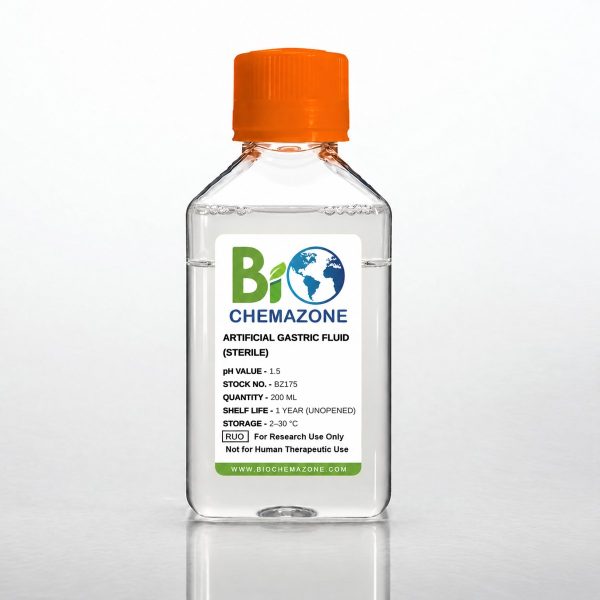
The set contains saliva (pH 6.5 ± 0.5), gastric fluid (pH 1.1 ± 0.1), duodenal fluid (pH 7.4 ± 0.2) and bile (pH 8.0 ± 0.2), each with the inorganic and organic components of the UBM recipe. The enzyme and protein components (α-amylase, mucin, pepsin, pancreatin, lipase, bile and albumin) are supplied in separate pre-weighed vials to be added on the day of use, which keeps their activity.
Using a matched, ready-made set cuts preparation time for this multi-fluid method and improves agreement between runs and laboratories. Each batch is prepared with ISO 3696 compliant high-purity water under Biochemazone’s ISO 9001 / GMP quality system.
Key Features & Benefits
✅ Made for ISO 17924 (UBM) – All four digestive fluids of the Unified BARGE Method
✅ Method pH Values – Saliva 6.5, gastric 1.1, duodenal 7.4, bile 8.0
✅ Enzymes Supplied Separately – Pre-weighed vials added on the day, for full activity
✅ Matched Set – Four fluids from the same batch
✅ Saves Preparation Time – No weighing of over 20 components
✅ ISO 3696 Grade Water – Prepared using high-purity laboratory water
✅ Consistent Batch-to-Batch – Better agreement between runs
✅ Made in Canada – Manufactured under ISO 9001 / GMP quality systems
Applications
🌍 Contaminated-Land Risk Assessment
• Oral bioaccessibility of arsenic, cadmium, lead and other metals in soil
• Site-specific human-health risk assessment
• Remediation and soil-amendment effectiveness
🧪 Consumer & Environmental Testing
• Bioaccessibility of metals in house dust and mine wastes
• Bioaccessibility of contaminants in foods and toys
• Method validation and inter-laboratory studies
🔬 Research
• Environmental geochemistry and exposure science
• Teaching of bioaccessibility methods
Usage Areas
- Environmental and contaminated-land laboratories
- Environmental consultants and risk assessors
- Geological surveys and regulators
- Mining and remediation companies
- Universities and research institutes
Typical Properties
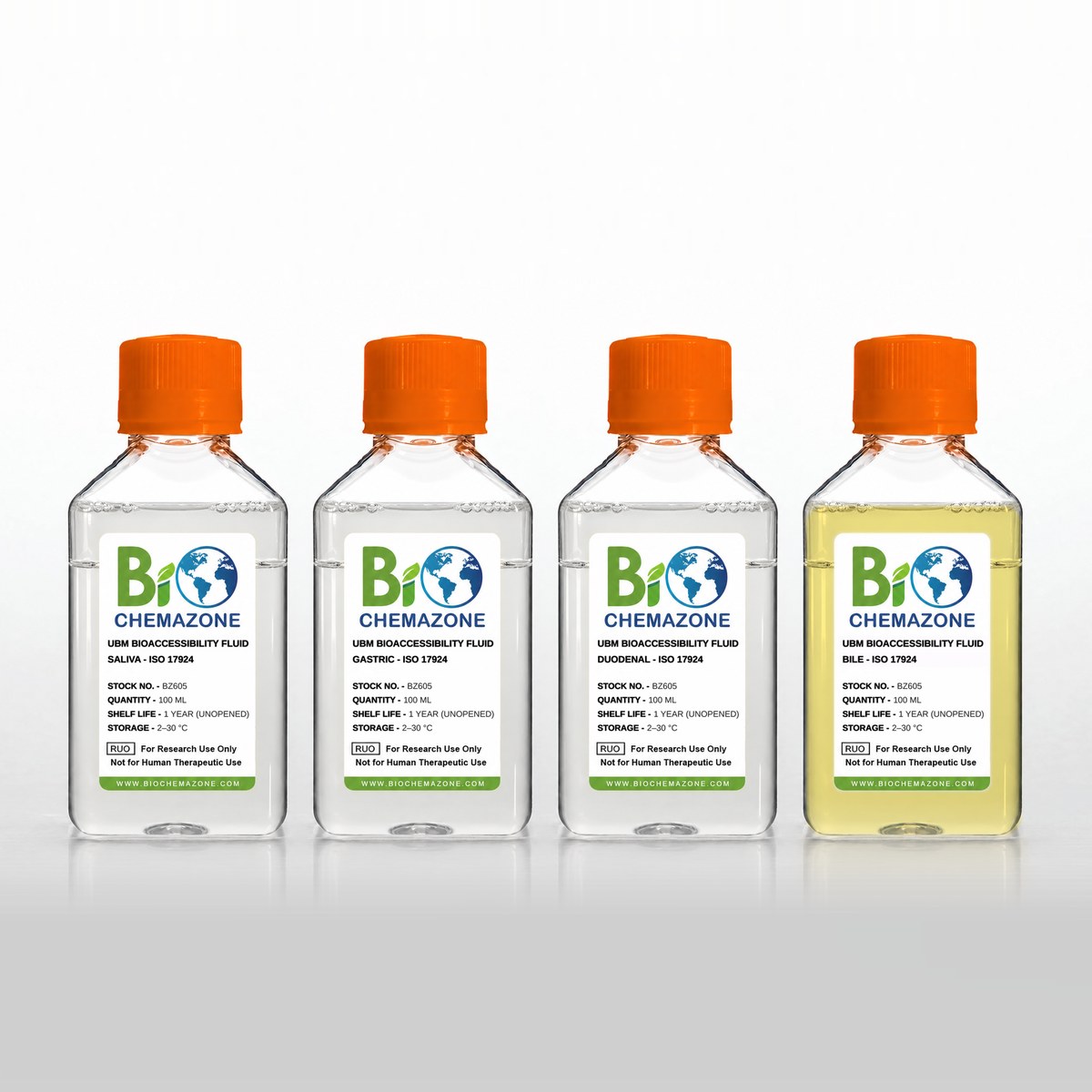
- Appearance: Clear liquids (saliva, gastric, duodenal); yellow liquid (bile)
- pH: saliva 6.5 ± 0.5; gastric 1.1 ± 0.1; duodenal 7.4 ± 0.2; bile 8.0 ± 0.2
- Fluids: Inorganic and organic components per the UBM recipe
- Enzyme and protein vials: α-amylase, mucin, pepsin, pancreatin, lipase, bile, albumin (added on the day of use)
- Water Grade: ISO 3696 purified water
Storage & Stability
- Storage Temperature: 2–30 °C
- Shelf Life: 1 year for unopened bottles
- Shipping: Room temperature
- Best kept at 2–8 °C for prolonged storage and stability of the enzyme and protein (α-amylase, mucin, pepsin, pancreatin, lipase, bile, albumin) components; storage at 2–30 °C is fine for short-term use
- Add enzymes the day of use and check pH before starting, as the method requires
Customization Options
- Individual fluids supplied separately
- Fluids with enzymes pre-added (for use within 24 hours)
- Other bioaccessibility methods (for example EPA Method 1340, PBET)
- Custom volumes and bulk supply
Ordering Information
BZ605 is available in standard laboratory sizes or OEM/bulk supply formats.
📄 MSDS, Technical Datasheet, and Certificate of Analysis (CoA) available upon request
📧 Email: info@biochemazone.com
🌐 Website: www.biochemazone.com
⚠️ For laboratory testing only. Not for human or animal use.