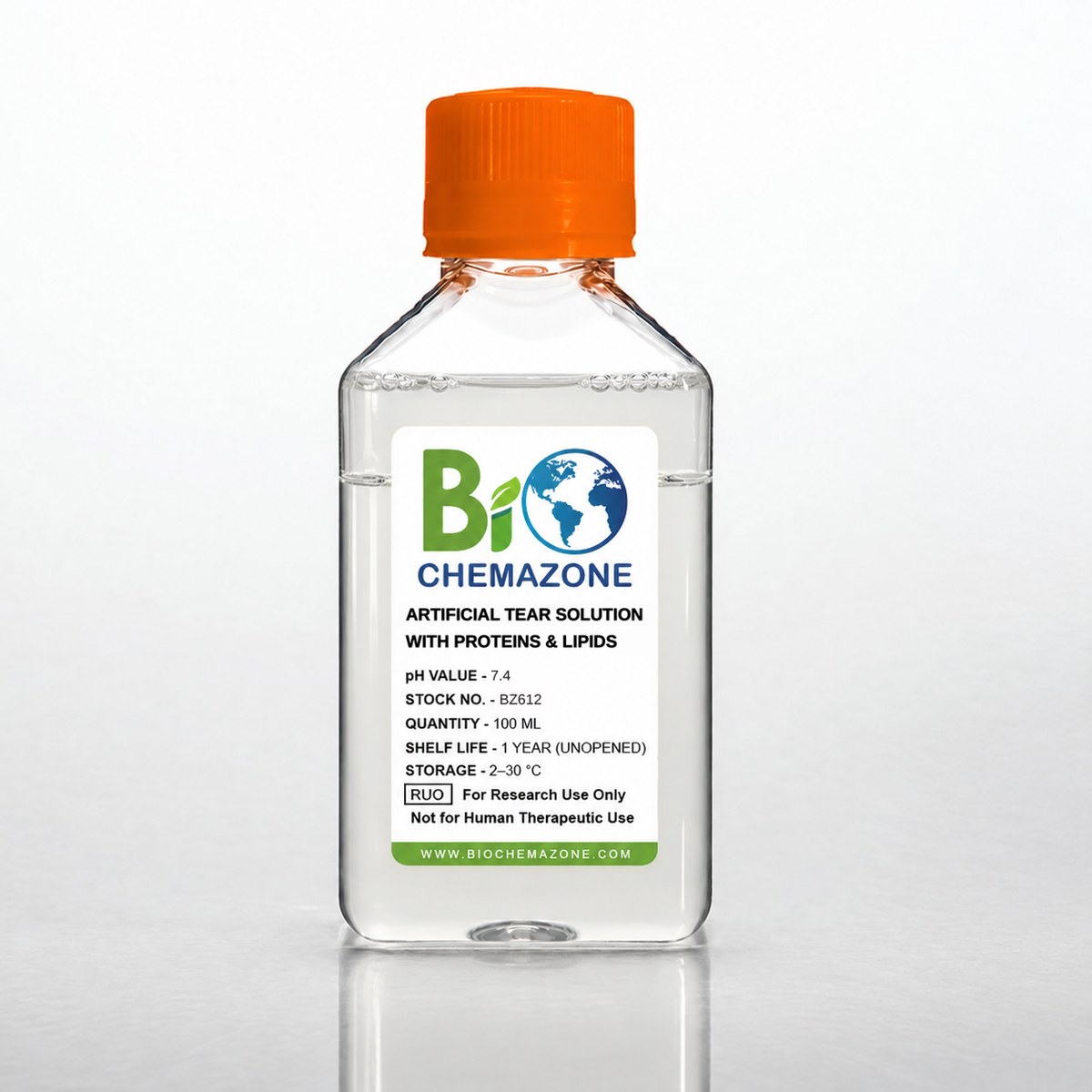
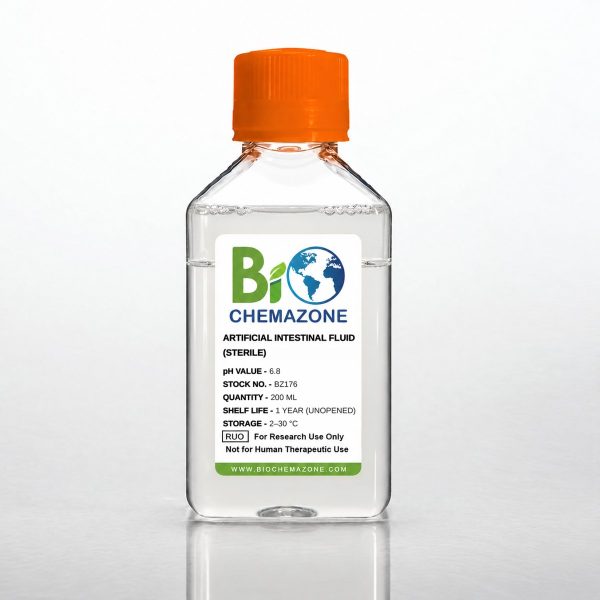
Artificial Tear Solution with Proteins and Lipids (Contact Lens Deposition Model) BZ612
Product Code: BZ612
Manufacturer: Biochemazone
Available Pack Sizes: 100 mL, 200 mL, 500 mL, 1 L
Custom Bulk Quantities Available
Product Overview
Biochemazone Artificial Tear Solution with Proteins and Lipids BZ612 is a complex tear model for studying how tear components deposit on contact lenses and interact with lens-care products. Unlike simple saline tears, it contains the main tear proteins – lysozyme, lactoferrin, albumin and mucin – together with a tear-lipid mixture of cholesterol esters, wax esters, phospholipids and fatty acids.
Protein and lipid deposits change lens comfort, wettability and vision, and different lens materials attract different deposits: silicone hydrogels tend to take up lipid, while ionic hydrogels take up lysozyme. Incubating lenses in BZ612 reproduces these deposits in the laboratory. The solution is buffered to pH 7.4 (range 7.2–7.6), the pH of the tear film, with tear-like electrolytes.
Each batch is prepared with ISO 3696 compliant high-purity water under Biochemazone’s ISO 9001 / GMP quality system. The proteins include materials of animal and human-recombinant origin; details are on the certificate.
Key Features & Benefits
✅ Tear Proteins – Lysozyme, lactoferrin, albumin and mucin
✅ Tear Lipids – Cholesterol esters, wax esters, phospholipids and fatty acids
✅ pH 7.4 (Range 7.2–7.6) – Matches the tear film
✅ Deposition Model – Reproduces protein and lipid deposits on lenses
✅ Tear-Like Electrolytes – Physiological salt background
✅ Consistent Batch-to-Batch – Repeatable lens-material comparisons
✅ ISO 3696 Grade Water – Prepared using high-purity laboratory water
✅ Made in Canada – Manufactured under ISO 9001 / GMP quality systems
Applications
👁️ Contact Lens Research
• Protein and lipid deposition on hydrogel and silicone-hydrogel lenses
• Wettability and surface-treatment studies
• Comparison of lens materials
🧴 Lens-Care Products
• Cleaning efficacy of multipurpose and peroxide solutions
• Deposit-removal and rub-rinse studies
• Compatibility of care solutions with deposited lenses
🔬 Ophthalmic Research
• Tear-film and dry-eye research models
• Intraocular-lens and ocular-device biofouling
Usage Areas
- Contact lens manufacturers
- Lens-care solution developers
- Ophthalmic research laboratories
- Optometry schools and universities
- Contract testing laboratories
Typical Properties
- Appearance: Slightly opalescent liquid
- pH: 7.4 (range 7.2–7.6)
- Proteins: Lysozyme, lactoferrin, albumin, mucin
- Lipids: Cholesterol esters, wax esters, phospholipids, fatty acids
- Electrolytes: Tear-like buffered saline
- Water Grade: ISO 3696 purified water
Storage & Stability
- Storage Temperature: 2–30 °C
- Shelf Life: 1 year for unopened bottles
- Shipping: Room temperature
- Best kept at 2–8 °C for prolonged storage and stability of the protein and lipid components; storage at 2–30 °C is fine for short-term use
- Warm to 35 °C and mix gently before incubating lenses
Customization Options
- Protein-only or lipid-only versions
- Fluorescently or radio-traceable labelled proteins on request
- Protein and lipid levels to customer specification
- Custom pack sizes and bulk supply
Ordering Information
BZ612 is available in standard laboratory sizes or OEM/bulk supply formats.
📄 MSDS, Technical Datasheet, and Certificate of Analysis (CoA) available upon request
📧 Email: info@biochemazone.com
🌐 Website: www.biochemazone.com
⚠️ For laboratory research only. Not for use in the eye. Not for human or animal use.