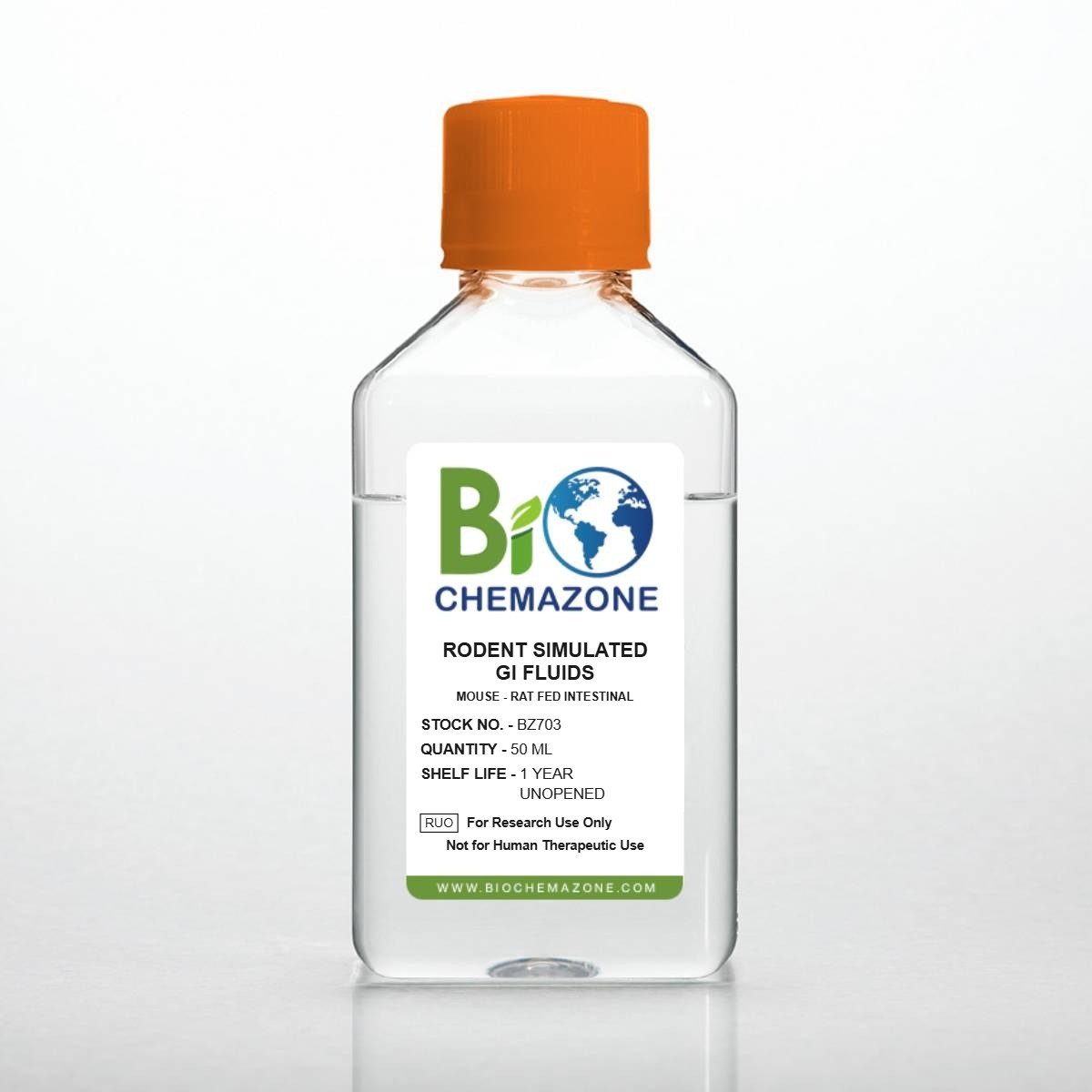
Mouse Simulated Gastric and Intestinal Fluids and Rat Fed-State Intestinal Fluid BZ703
Product Code: BZ703
Manufacturer: Biochemazone
Available Pack Sizes: 50 mL, 100 mL, 200 mL, 500 mL
Custom Bulk Quantities Available
Product Overview
Biochemazone Mouse Simulated Gastric and Intestinal Fluids and Rat Fed-State Intestinal Fluid BZ703 complete our rodent GI media for preclinical formulation work. Mice and rats have gastric and intestinal conditions that differ from humans, and dosing vehicles that work in human media can behave differently in rodents.
The mouse gastric fluid is a mildly acidic salt solution with pepsin and a pH of about 3.5 (range 3.0–4.0), reflecting the less acidic rodent stomach. The mouse intestinal fluid contains bile salts and phospholipid at a pH of about 6.0 (range 5.5–6.5). The rat fed-state intestinal fluid has higher bile-salt and lipid levels, including fat-digestion products, at a pH of about 6.0 (range 5.5–6.5). Pepsin (porcine) and bile salts are of animal origin.
The compositions are based on published rodent GI data, which vary between studies and strains; check them against the data you use for your PK models. They complement our rat fasted gastric, fed gastric and intestinal fluids (BZ546 to BZ548). Each batch is prepared with ISO 3696 compliant high-purity water under Biochemazone’s ISO 9001 / GMP quality system.
Key Features & Benefits
✅ Completes Rodent Set – Mouse fluids and rat fed intestinal
✅ Rodent pH Values – Gastric about 3.5; intestinal about 6.0
✅ Pepsin in Gastric Fluid – Porcine origin
✅ Bile Salts and Lipids – Fed-state solubilisation
✅ Small Pack Sizes – From 50 mL for rodent work
✅ Consistent Batch-to-Batch – Repeatable vehicle screening
✅ ISO 3696 Grade Water – Prepared using high-purity laboratory water
✅ Made in Canada – Manufactured under ISO 9001 / GMP quality systems
Applications
🐁 Preclinical Formulation
• Dosing-vehicle screening for mouse and rat studies
• Precipitation of supersaturating formulations
• Food-effect studies in rats
💊 DMPK Support
• Solubility input for PBPK models
• Explaining species differences in exposure
🔬 Research
• Drug stability in rodent GI media
• Lipid-based formulation digestion
Usage Areas
- Pharma formulation groups
- DMPK and PK groups
- Preclinical CROs
- Drug-delivery researchers
- Universities
Typical Properties
- Appearance: Clear, colourless liquid (gastric); slightly hazy (intestinal)
- pH: mouse gastric about 3.5 (range 3.0–4.0); intestinal fluids about 6.0 (range 5.5–6.5)
- Composition: Salts with pepsin (porcine); buffers with bile salts, phospholipid and, in the rat fed-state fluid, fat-digestion products
- Water Grade: ISO 3696 purified water
Storage & Stability
- Storage Temperature: 2–30 °C
- Shelf Life: 1 year for unopened bottles
- Shipping: Room temperature
- Best kept at 2–8 °C for prolonged storage and stability of the pepsin, bile salt and phospholipid components; storage at 2–30 °C is fine for short-term use
- Warm to 37 °C and mix gently before use
Customization Options
- Mouse fasted and fed gastric pairs
- pH and bile-salt levels from your own data
- Dry powder versions
- Small aliquots
Ordering Information
BZ703 is available in standard laboratory sizes or OEM/bulk supply formats.
📄 MSDS, Technical Datasheet, and Certificate of Analysis (CoA) available upon request
📧 Email: info@biochemazone.com
🌐 Website: www.biochemazone.com
⚠️ For research and product testing only. Not for veterinary or human therapeutic use.