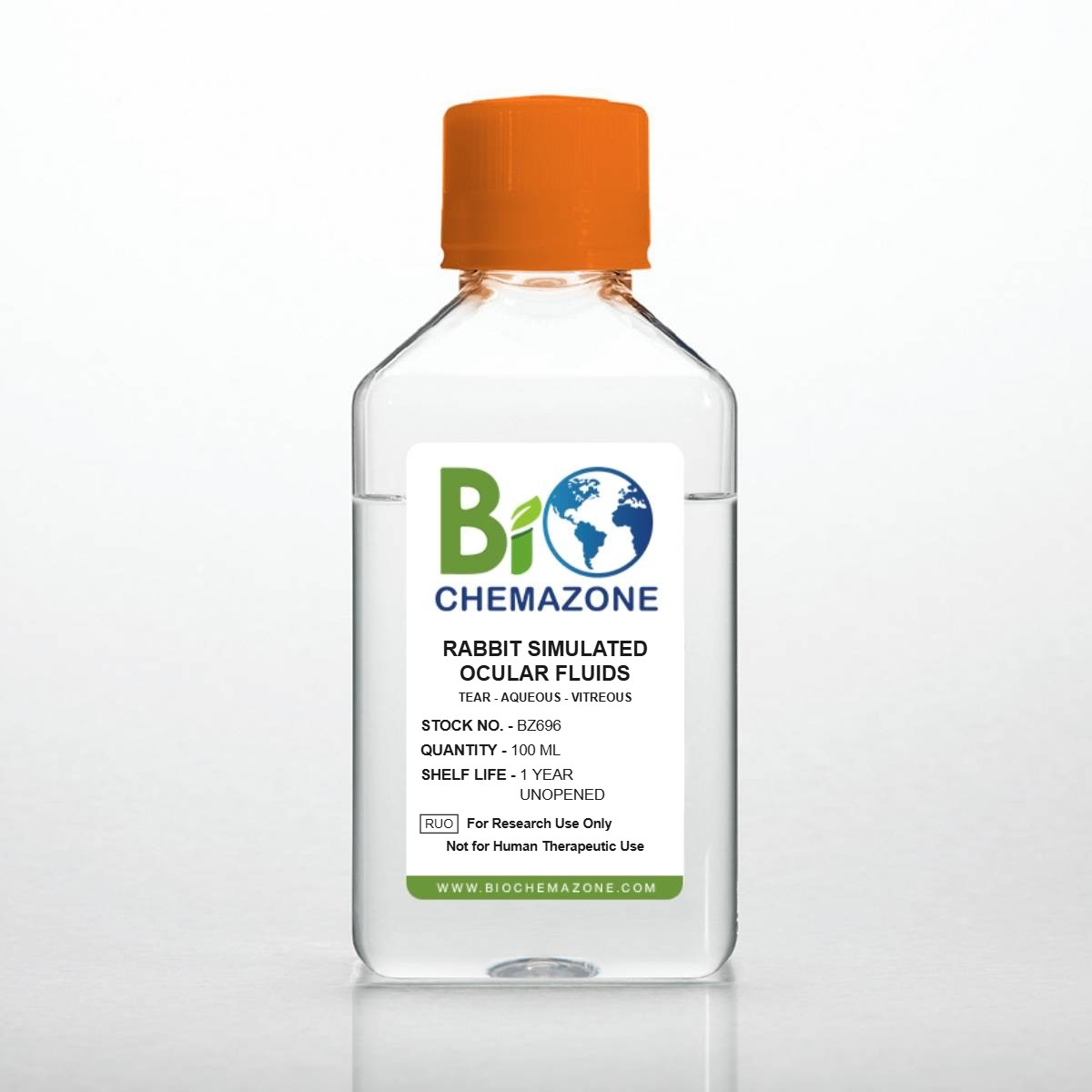
Rabbit Simulated Ocular Fluids (Tear Fluid, Aqueous Humour, Vitreous Humour) BZ696
Product Code: BZ696
Manufacturer: Biochemazone
Available Pack Sizes: 100 mL, 200 mL, 500 mL, 1 L
Custom Bulk Quantities Available
Product Overview
Biochemazone Rabbit Simulated Ocular Fluids BZ696 are release and stability media for ophthalmic formulations that will be tested in the rabbit, the usual animal model for ocular drug delivery. Using a medium that resembles rabbit rather than human eye fluids makes it easier to compare in-vitro release with rabbit in-vivo data.
Three fluids are offered. The simulated tear fluid is an electrolyte and bicarbonate solution for eye drops, gels and contact-lens work. The artificial aqueous humour contains electrolytes, glucose, bicarbonate and ascorbate, which is present at high levels in rabbit aqueous humour. The simulated vitreous humour adds hyaluronic acid to give a viscous gel-like medium for intravitreal implants and injections. All three are adjusted to a pH of about 7.4–7.6.
The compositions are based on published values for rabbit eye fluids; the certificate lists the measured pH and osmolality of each batch. We can match a composition from your own reference if you have one. Each batch is prepared with ISO 3696 compliant high-purity water under Biochemazone’s ISO 9001 / GMP quality system.
Key Features & Benefits
✅ Rabbit-Based Compositions – Tear, aqueous and vitreous fluids
✅ pH About 7.4–7.6 – Stated for each fluid
✅ Ascorbate in Aqueous Humour – As in the rabbit eye
✅ Viscous Vitreous Model – Hyaluronic acid gel-like medium
✅ Pairs With Human Versions – Compare rabbit and human media
✅ Measured Osmolality – Reported on each certificate
✅ ISO 3696 Grade Water – Prepared using high-purity laboratory water
✅ Made in Canada – Manufactured under ISO 9001 / GMP quality systems
Applications
👁️ Ophthalmic Formulation
• Drug release from eye drops, gels and inserts
• Intravitreal implant and injection release
• Contact-lens uptake and release
🐇 Preclinical Support
• In-vitro/in-vivo comparison with rabbit data
• Dose-form screening before animal studies
🔬 Research
• Drug stability in ocular fluids
• Ocular pharmacokinetic modelling
Usage Areas
- Ophthalmic pharmaceutical companies
- Contact-lens manufacturers
- Preclinical CROs
- Drug-delivery research groups
- Universities
Typical Properties
- Appearance: Clear, colourless liquid; vitreous fluid is viscous
- pH: about 7.4–7.6
- Composition: Electrolytes and bicarbonate (tear); plus glucose and ascorbate (aqueous humour); plus hyaluronic acid (vitreous)
- Water Grade: ISO 3696 purified water
Storage & Stability
- Storage Temperature: 2–30 °C
- Shelf Life: 1 year for unopened bottles
- Shipping: Room temperature
- Best kept at 2–8 °C for prolonged storage and stability of the ascorbate and hyaluronic acid components; storage at 2–30 °C is fine for short-term use
- Protect from light; ascorbate is light and air sensitive
Customization Options
- Protein or lysozyme added to the tear fluid
- Different hyaluronic acid levels for the vitreous
- Sterile-filtered versions
- Bulk supply
Ordering Information
BZ696 is available in standard laboratory sizes or OEM/bulk supply formats.
📄 MSDS, Technical Datasheet, and Certificate of Analysis (CoA) available upon request
📧 Email: info@biochemazone.com
🌐 Website: www.biochemazone.com
⚠️ For research and product testing only. Not for veterinary or human therapeutic use.