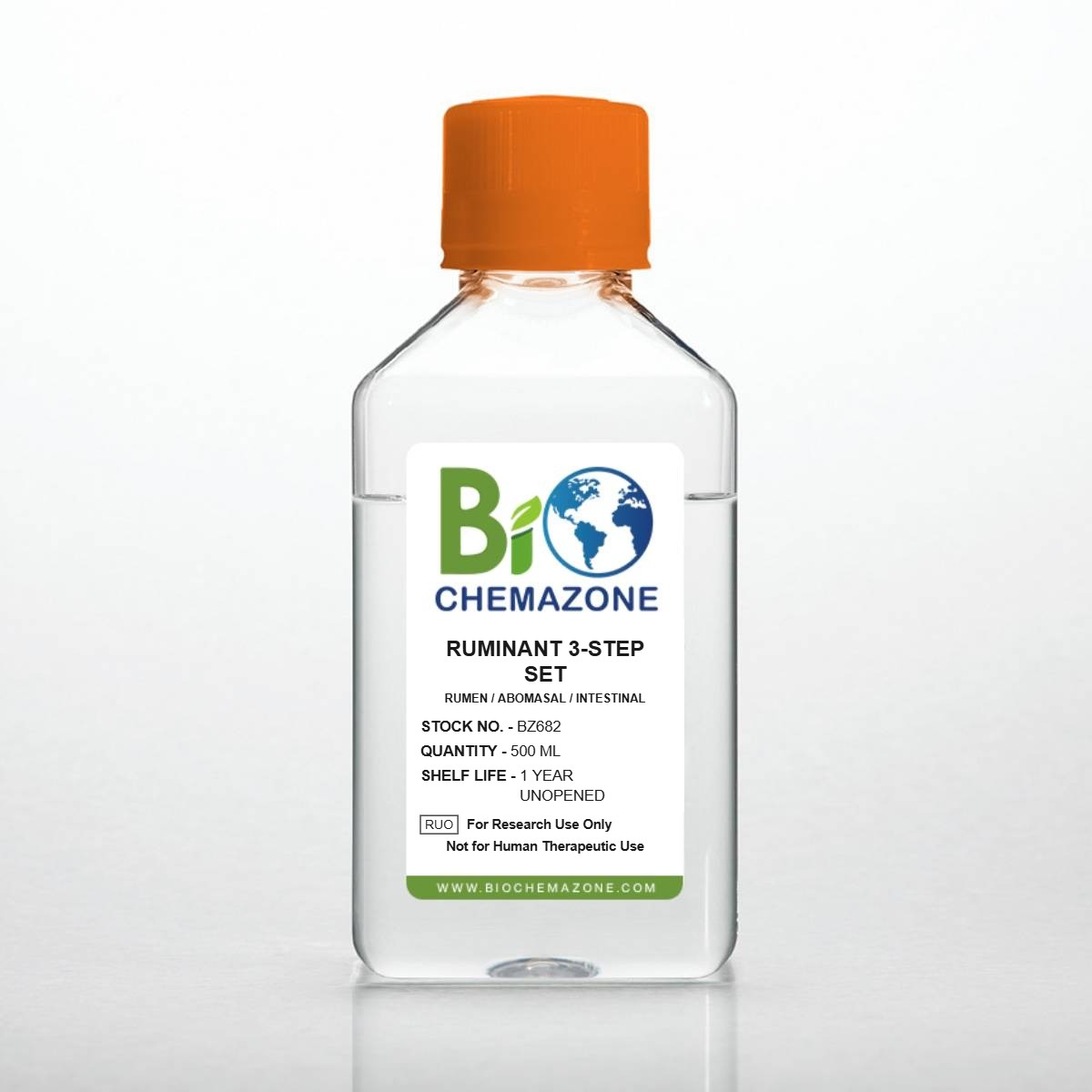
Ruminant Three-Step In-Vitro Set (Rumen Buffer, Abomasal Fluid, Intestinal Fluid) BZ682
Product Code: BZ682
Manufacturer: Biochemazone
Available Pack Sizes: 500 mL, 1 L, 5 L (sets contain one of each fluid)
Custom Bulk Quantities Available
Product Overview
Biochemazone Ruminant Three-Step In-Vitro Set BZ682 supplies the fluids for testing feed ingredients as they pass the rumen, abomasum and small intestine of cattle, sheep and goats. It follows the three-step approach of Calsamiglia and Stern (1995) and is used to measure how much of a rumen-protected amino acid, choline, fat or bypass protein survives the rumen and is then released or digested further down the tract.
Three fluids are offered, singly or as a set. The rumen buffer is a bicarbonate-phosphate artificial-saliva buffer with a pH of about 6.8 when gassed with CO₂ at 39 °C; rumen fluid is not included. The abomasal fluid is hydrochloric acid with pepsin, pH about 1.9. The intestinal fluid is a phosphate buffer with pancreatin, pH about 7.8. Pepsin and pancreatin are of porcine origin and are animal-derived; they are supplied as pre-weighed powders to add on the day of use.
Check incubation times, enzyme amounts and pH in the published method or your in-house protocol. Each batch is prepared with ISO 3696 compliant high-purity water under Biochemazone’s ISO 9001 / GMP quality system.
Key Features & Benefits
✅ Three Gut Stages – Rumen, abomasum and small intestine
✅ Calsamiglia & Stern Approach – Widely used three-step method
✅ Stated pH – Rumen 6.8; abomasal 1.9; intestinal 7.8
✅ Enzymes Added Fresh – Pre-weighed pepsin and pancreatin
✅ Singles or Sets – One fluid or all three
✅ Up to 5 L – For large test series
✅ ISO 3696 Grade Water – Prepared using high-purity laboratory water
✅ Made in Canada – Manufactured under ISO 9001 / GMP quality systems
Applications
🐄 Rumen-Protected Products
• Release of protected methionine and lysine
• Protected choline and fat release
• Coating and encapsulation development
🌾 Feed Evaluation
• Bypass-protein intestinal digestibility
• Protein supplement comparison
🧪 Quality Control
• Batch release of protected products
• Stability and shelf-life studies
Usage Areas
- Feed-additive manufacturers
- Feed-analysis laboratories
- Animal-science departments
- Encapsulation and coating companies
- Contract research organisations
Typical Properties
- Appearance: Clear, colourless liquids; enzymes as white to cream powders
- pH: rumen buffer about 6.8 (CO₂-gassed); abomasal fluid about 1.9; intestinal fluid about 7.8
- Composition: Rumen buffer: bicarbonate and phosphate salts. Abomasal: HCl with pepsin (porcine, animal-derived). Intestinal: phosphate buffer with pancreatin (porcine, animal-derived)
- Enzymes: Supplied separately as pre-weighed powders
Storage & Stability
- Storage Temperature: 2–30 °C
- Shelf Life: 1 year for unopened bottles
- Shipping: Room temperature
- Best kept at 2–8 °C for prolonged storage and stability of the pepsin and pancreatin enzyme components; storage at 2–30 °C is fine for short-term use
- Add enzymes on the day of use; warm to 39 °C before incubation
Customization Options
- Enzyme amounts matched to your protocol
- Rumen buffer as a dry salt kit
- Antimicrobial added to the intestinal step
- Bulk supply
Ordering Information
BZ682 is available in standard laboratory sizes or OEM/bulk supply formats.
📄 MSDS, Technical Datasheet, and Certificate of Analysis (CoA) available upon request
📧 Email: info@biochemazone.com
🌐 Website: www.biochemazone.com
⚠️ For research and product testing only. Not for veterinary or human therapeutic use.